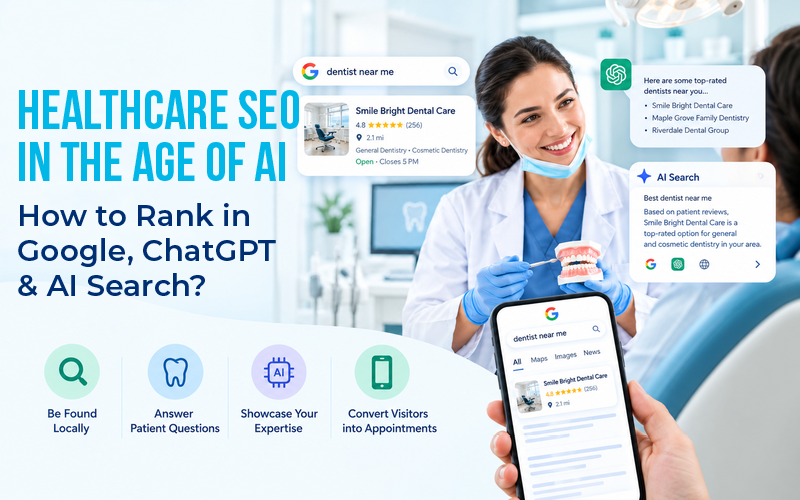
You’ve put a lot of years into building your practice. Your patients are familiar, your staff is competent, and you’ve established a reputation within your community. And then someone searches “your specialty” and “your town” and you’re nowhere to be found.
That gap costs you patients. People looking for care are often anxious, short on time, or comparing three clinics at once. If they can’t find you, they’ll book with whoever they can find.
The search is evolving too. Patients are increasingly requesting a recommendation from ChatGPT or Google’s AI features rather than browsing a long list of links. Trying to address that while juggling the demands of your appointments, payroll, and crowded waiting room is a tall order for anyone.
At Scrum, we take sprawling, abstract ideas and divide them up into short cycles, or Sprints. We run your healthcare SEO in Sprints, so you can always tell what’s changing from week to week, and how it’s changing your practice.
Why Being Found Online Matters
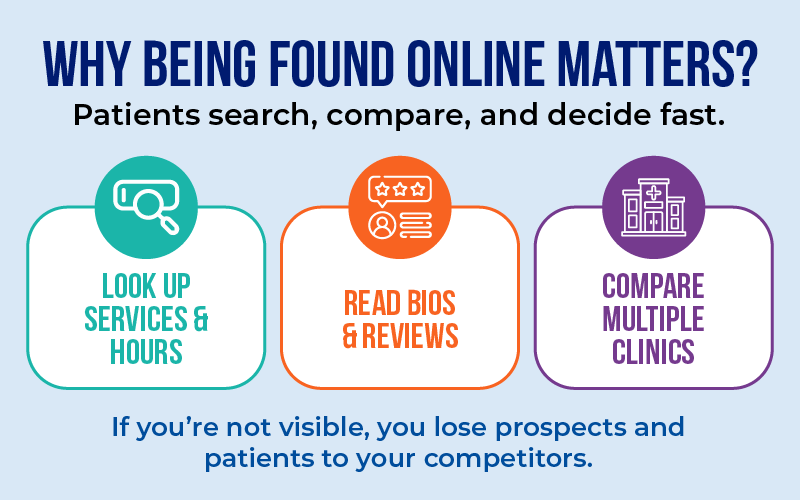
Imagine a person who needs a new physician. They’re just as likely to call a friend or neighbor first. But before they even lift the phone to dial, they’ll probably head online to look up office hours, tour the site, read bios of the staff, and browse reviews.
If the competition looks good for those search results and you fade into the background, you lose prospects that you didn’t even realize you were losing.
Proper healthcare SEO gets you in front of the searches that matter: your specialty, your services, your area. But it’s got a lot of wheels and gears, too. Service pages require plenty of content. The website must be fast and easy to read on a mobile. Your address, phone number, and business hours must be consistent everywhere they’re published. And all of that needs frequent maintenance. Which you don’t have time for.
We spend time rewriting a page for a service and solving technical glitches that prevent search engines from crawling the site. When the Sprint finishes, the team reviews what they’ve completed, collects feedback, and then plans the next Sprint. You don’t have to keep guessing if your marketing budget is paying off, because you can see it.
Start With What Patients Actually Ask
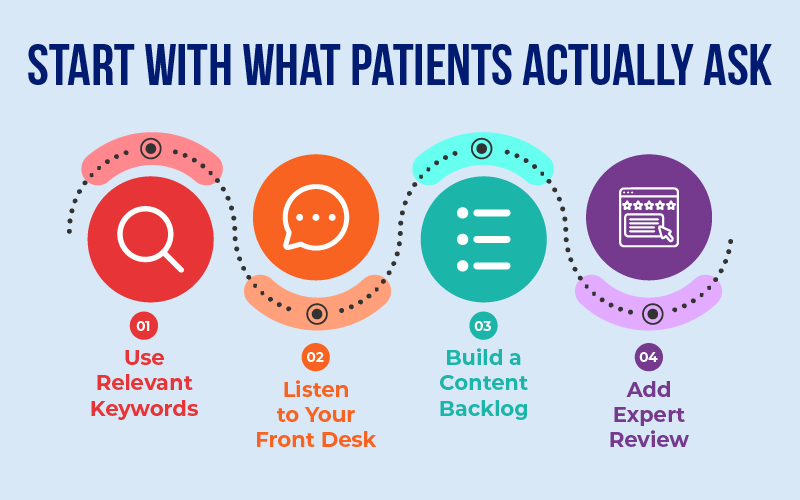
Healthcare content strategy that works successful healthcare content starts with patient needs, the who/what/why of questions, and clear workflows. With Scrum, healthcare organizations can develop quality, helpful content on time, every time.
Focus on What Patients Actually Search For
- Use Relevant Keywords: as you write, try to include words patients often search for (like: ‘cardiologist near me’, or ‘what happens at first physical therapy appointment’).
- Answer Questions in Plain Language: Focus on providing useful, easy-to-understand information rather than worrying about keyword density or search engine algorithms.
Gather Content Ideas From Your Front Desk
- Hear the Most Common Patient Questions: Reception staff and appointment schedulers hear questions about referrals, parking, and what to bring to appointments.
- Flip the Scripts: For instance, a physiotherapy practice could put out a post that explains how to get ready for a first appointment, so nervous patients will be more willing to contact you.
Build and Focus on a Content Backlog
- Make a Priority List: Store your ideas for content, and order them per how much your patients want it and how much it will benefit your practice.
- Cross-team Collaboration: involve someone from marketing working with the practice rep (potentially the office manager or a practitioner) to focus on the ideas.
- Define Sprints Objectives: Choose the tasks, from the taskboard, to accomplish in the upcoming Sprint.
Organize Content Creation Into Sprints
- Create tangible deliverables: One Sprint might be dedicated to gathering all questions from patients and refining a service page.
- Publish and refresh the content: Another sprint could be publishing a clinician-reviewed article or updating out of date resources.
Add professional review to ensure everything on a healthcare page is accurate, add expert review into the production process early on, not as a rush job at the end.
Understand How AI Search Is Changing Patient Searches
- Google AI Overviews and AI Mode: These tools offer summarized responses at the top of search results, assisting patients in quickly locating information.
- What is the ChatGPT Search: It is designed to help users find healthcare information from the ChatGPT AI chatbot by combining its answers with links to relevant information on the internet.
- Changing Patient Behavior: Patients may research symptoms, compare services and locate healthcare providers using these AI-enabled solutions.
Learn more about AI and Generative Engine SEO in our Blog:
Make Your Website Demonstrate Expertise
- Build Trust through Content: Your site should highlight deep healthcare expertise and supply dependable, useful details for every visitor.
- Put the Patient First: Compose writing that answers the common questions people bring to their doctors in plain, clear language.
- Steer clear of Chasing Shortcuts: No provider can promise placement inside AI-generated replies. The real work involves making trustworthy, helpful material for real humans and following Google’s core guidance.
How Healthcare SEO Team at Scrum Works?
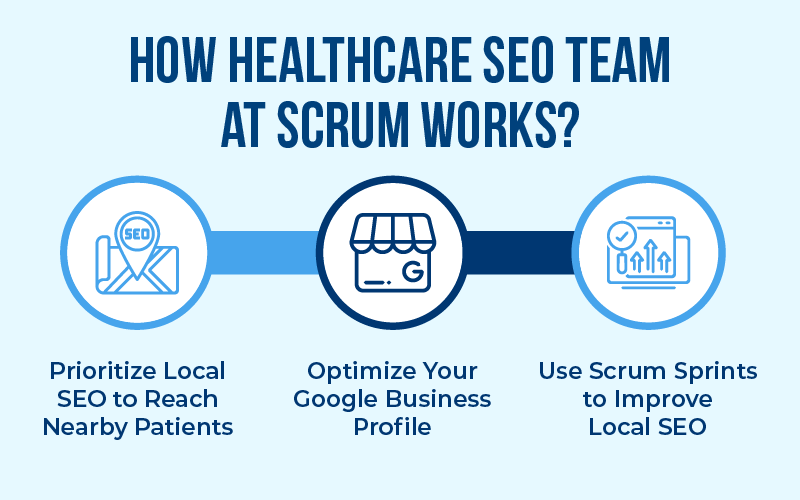
Our team at Scrum Digital learns from the results and patterns and then adjust on a regular schedule instead of reacting to whatever a vendor is hyping this month.
Prioritize Local SEO to Reach Nearby Patients
- Target Local Searches: Focus on keywords like “dermatologist near me” to reach patients seeking healthcare services in your local area.
- Know Local Ranking Factors: Google uses 3 main factors when ranking local results:
- Relevance: How well your practice matches the patient’s search.
- Distance: How close your practice is to the searcher.
- Prominence: How well-known your practice is online and offline.
Learn the Hidden Costs of Ignoring Local Marketing in our Blog:
Optimize Your Google Business Profile
- Verify Business Details: Ensure your address, phone number, operating hours, website, and listed services are accurate and up to date.
- Start with Quick Improvements: Correcting outdated or incorrect information is a practical first step toward improving your local online presence.
Use Scrum Sprints to Improve Local SEO
- Sprint 1: Fix your business listings. Fix inaccurate address, phone number, hours of operation, and practice info on all your online listings.
- Sprint 2: Refine location pages. Develop a listing and improved pages for each practice location including the relevant service content.
- Sprint 3: Appointment requests made easy. Help your patients find it easier to reach your practice or request an appointment on the web.
- Tackle High-impact Activities: If your practice has many locations and services, concentrate on the largest opportunities first and expand to the rest as you grow.
How Digitizing Helps with Healthcare Business
Make Appointment Booking Easy for Patients
- Easy-to-Find Phone Number: Make sure that your patients can easily locate your practice’s phone number and contact information. If they have a difficult time reaching you, they may decide to go to another clinic.
- Simplify the Patient Experience: Guide your visitors to locating practitioners, learning about the treatments, and making appointments easily.
- Ensure Top-notch Mobile Usability: Your patients are most likely to find you on their smartphones, so ensure your website performs well on mobile.
Measure Results That Matter
- Get Patient Stats: Log the number of patients calling your practice, filling out booking forms, and so on.
- Look Website Traffic: Visitors are a good indicator of how many people can find you online. Still, appointment inquiries are even more telling of your site’s effectiveness.
- Review and Improve: Use the results from each Sprint to identify what works and focus on improvements for the next Sprint.
How Scrum Manages Healthcare SEO?
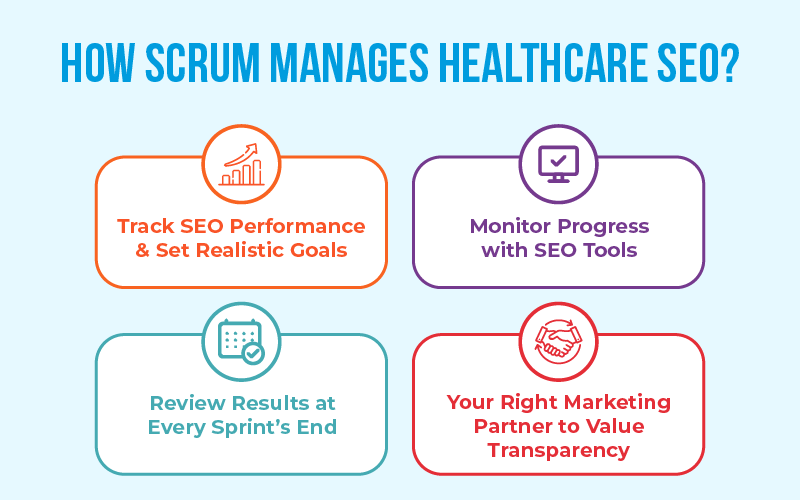
Track SEO Performance and Set Realistic Expectations
- Understand that SEO Takes Time: SEO results in Healthcare Services are rarely instant and rankings tend to fluctuate. Don’t expect immediate results and remain optimistic about the future.
- Measure Meaningful Results: Measure success by increases in visibility and visits to your site and contacts from patients, not keyword rankings.
Use Tools to Monitor SEO Progress
- Google Search Console: Find out what search terms bring in impressions and clicks, as well as tracking your site’s performance in Google Search.
- Analytics Tools: Gain insights into how visitors are engaging with your website and monitor appointment requests and make sure your analytics are set up so to all healthcare privacy regulations.
- Indexing Checks: Make sure important service pages are indexed and discoverable by search engines.
- Local SEO Reviews: Verify all your business listings are up-to-date and represented properly.
- AI Search Visibility: Experiment with patient searches that are relevant to your practice in AI search tools and check if your practice is visible in the answers or referenced sources.
Review Results at the End of Every Scrum Sprint
- Evaluate Completed Tasks: Review which SEO improvements were delivered during the Sprint.
- Analyze Performance Data: Look into your website’s search visibility, the kind of engagement you’re getting and the appointment requests coming in.
- Choose the Next Priority: We use the results to guide your decisions over, which actions take priority in your next Sprint.
- Allow Enough Time for Results: sometimes with SEO task, you may need more than 2 weeks for your post to outrank your competitors, which means some elements may take some months to show good results.
Your Right Marketing Partner to Value Transparency
- Ask for Clear Explanations: Your marketing collaborator ought to lay out exactly what they are doing, why each task and project is necessary, and how it will be measured.
- Expect Regular Reporting: Seek updates that demonstrate the progress of ready work with performance metrics and business objectives.
- Review Progress Together: Each Sprint ends with a review of achievements and results, which is conveyed to the client in plain and simple language.
Final Thoughts
Running a healthcare practice is busy enough. There’s no reason for you to become an SEO expert to attract new patients.
Scrum offers your marketing team an obvious structure for prioritizing enhancements, collaborating with your practitioners and responding to changes in search without throwing anyone off balance.
Begin with one question. If today someone Googled precisely the service you offer, would you show up? Could they figure out how well you might serve them and learn how to make a reservation? If you’re unsure, that’s the place to start.
Come together with your marketing team and pinpoint your biggest gap. Set a real attainable focused Sprint goal, review the outcome as a team and set the next one. Every search you encounter is someone seeking your help. If you are curious where your practice is at currently, our team will walk you through a process and identify your first Sprint goal.